

By Peter Kaldes, President & CEO, Next50
Every May, we observe Older Americans Month. We often treat this occasion as a polite celebration. That framing misses the point.
Aging is one of very few truly universal human experiences. We are all aging. And many of us will live into older age, with the average lifespan in the United States now around 78 years. Long before that, many of us will help care for someone who is aging or disabled—often a parent, a partner, or another loved one.
In fact, 63 million Americans are family caregivers, and their contribution to aging and disability care to the U.S. economy exceeded $1 trillion in economic value in 2024, according to a new report from the AARP Public Policy Institute. Aging is not a niche issue. It is the economic and social context for everything around us.
And in the United States today, we are profoundly unprepared for it. We have built systems that assume aging is rare, short, and manageable. None of those assumptions are still true.
The Demographic Shift We Keep Treating Like a Surprise
Every day, roughly 10,000 Americans turn 65, and as of 2026, a similar number of baby boomers have begun turning 80 each day. This has been true for years, and it will continue for years to come. Yet our systems—for health care, housing, work, and financial security—still operate as if longer lives were an exception rather than the norm.

When Older Americans Month was first established in 1963 by President John F. Kennedy, fewer Americans lived deeply into old age, and poverty among older adults was more widespread. The intent then was both recognition and responsibility: to honor older adults’ contributions and to confront whether society was meeting their needs.
More than sixty years later, the same question remains—but the scale, cost, and complexity of aging today make the consequences of inaction far greater.
Today, a person turning 65 can expect to live two or even three more decades. Longevity should feel like a triumph. Instead, for too many families, it becomes a source of anxiety and financial strain.
Caregiving: The Gateway to Understanding Economic Challenges in Aging
If you want to understand how unprepared we are for aging, look at caregiving.
More than 63 million Americans provide unpaid care to an aging, ill, or disabled loved one. Many do so while working full-time, per the AARP Public Policy Institute. Many reduce hours, turn down promotions, or leave the workforce entirely. Caregiving is often invisible in our economic data, yet it props up the entire system.
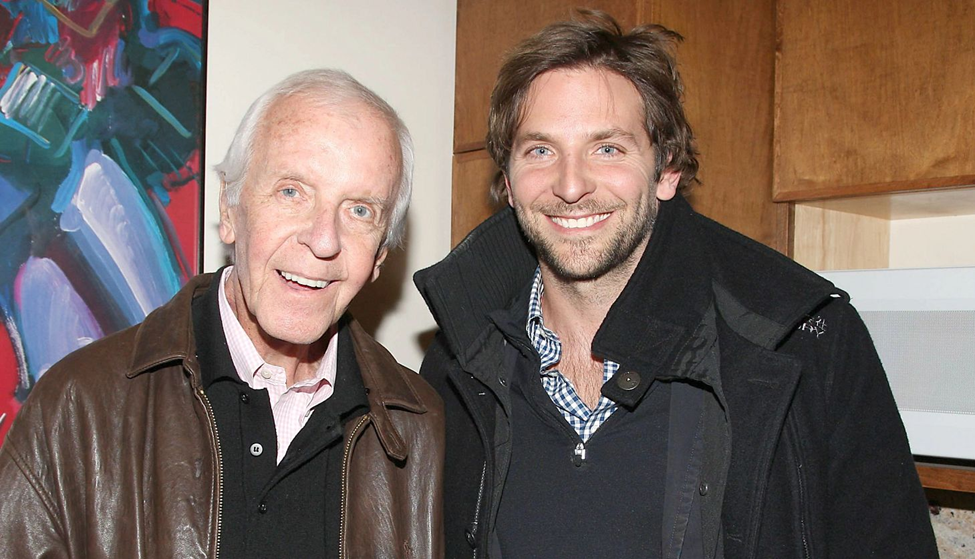
That reality is powerfully captured in the Next50-supported PBS documentary Caregiving, executive produced by Bradley Cooper. The film makes visible what tens of millions of families already know: caregiving is deeply meaningful work, and it is also exhausting, isolating, and financially destabilizing when systems fail to support it.
As Cooper has said of his own experience caring for his father with lung cancer: “I came to appreciate how we need to care for caregivers better.” The documentary underscores a simple truth: caregiving operates on the margins of our economy, yet it affects everyone.
Most Americans will be caregivers long before they think of themselves as “older adults.” And the absence of support for caregivers is one of the clearest signs that our aging infrastructure is broken.
The Real Fault Line: Affordability
At its core, the challenge of aging in America centers on affordability.
Health care costs rise as we age, even with Medicare. Out-of-pocket costs consume a significant share of fixed incomes. A person retiring today can expect to spend over $172,500 on health care alone during retirement, per a Fidelity report in 2025. This figure does not include long-term care, which can be an order of magnitude more expensive for many families caring for conditions as typical as dementia, cancer, or a stroke.
The result is economic insecurity that spreads far beyond older adults—reshaping careers, draining savings, and forcing families to make decisions under pressure with limited support.
Poverty rates among older adults are on the rise, and over 90% of Americans say they could not afford even one year of $100,000 annual cost for nursing home expenses per the Kaiser Family Foundation (KFF). Two out of five adults “incorrectly believe that Medicare is the primary source of coverage for people who need nursing or home care,” according to a different recent KFF issue brief, versus the out-of-pocket reality.
When aging becomes unaffordable, families absorb the shock. Adult children provide care without pay. Caregivers burn out. Savings disappear faster than planned. Crises become inevitable and expensive.
This is a quiet transfer of cost from systems to families.
What would it look like to do this differently? It would mean treating caregiving as essential economic infrastructure—not invisible labor. It would mean designing health and long-term care financing that reflects how people actually age, not how programs were built decades ago.
And it would mean investing in tools, services, and policies that help families navigate complexity before crisis hits, rather than after options have narrowed. For the first time, we also have new tools—from data infrastructure to AI—that make it possible to simplify and scale support in ways that were not feasible even a decade ago.
Why Older Americans Month Still Matters
Older Americans Month is not about nostalgia or congratulations. It is about accountability.
It asks whether we are building systems that reflect demographic reality and of a future to come. It reminds us that aging without economic security is not progress. And it insists that how we age is inseparable from how our economy actually functions.
Older adults outnumber children in 11 states and nearly half of U.S. counties per Census data. This shift is already shaping labor markets, housing demand, health care delivery, and public budgets. In many communities, aging is defining today’s economic reality.

Older Americans Month is not a celebration of the present. It is a call to build something better before more families are forced to carry the cost alone.



 English
  Español de México