
By Rach Angard, Community Impact Manager, Next50
At this year’s 2026 Academy Awards, 75-year-old Amy Madigan won her first Oscar for Best Supporting Actress, forty years after she was last nominated. This was a landmark moment, showing that older women can play complex and strange characters – and they can get recognition for it on cinema’s biggest stage.
Women make up only 25% of the portrayals of people over 50 in films1. They are four times as likely as male actors to be represented as feeble, frail, or frumpy 1. While men over 50 are shown more favorably in film, it isn’t always strong and sexy for them, either. Older men are regularly shown as curmudgeonly or close-minded. They are six times more likely to be shown as having health problems than their female counterparts, often reducing their stories down to medical diagnoses 2. When movies show older adults in these ways, they reinforce ageist stereotypes both on- and off-screen.
These disappointing depictions of older adults in media feel baked into Hollywood, but a look at the past and the future of filmmaking paints a different – and perhaps more hopeful – picture.
The Golden Age of Hollywood was a bright spot for older adults. Spanning from the 1920s to the 1960s, the film industry had already proved itself to be innovative and lucrative. Studios were willing to take risks on scripts and actors and directors, which gave older adults unexpected opportunities. Jimmy Stewart and Alfred Hitchcock collaborated on four films in the 1950s, when both men were in their fifties. Rear Window (1954) and Vertigo (1958) are both must-watch classics, with their older male leads shown as intelligent and capable, not bothered or unhealthy. While the leading ladies of this era were mostly in their 20s and 30s, many recognizable names went on to have successful, decades-long careers. Among these talented actresses are Katharine Hepburn, Lauren Bacall, and Ingrid Bergman
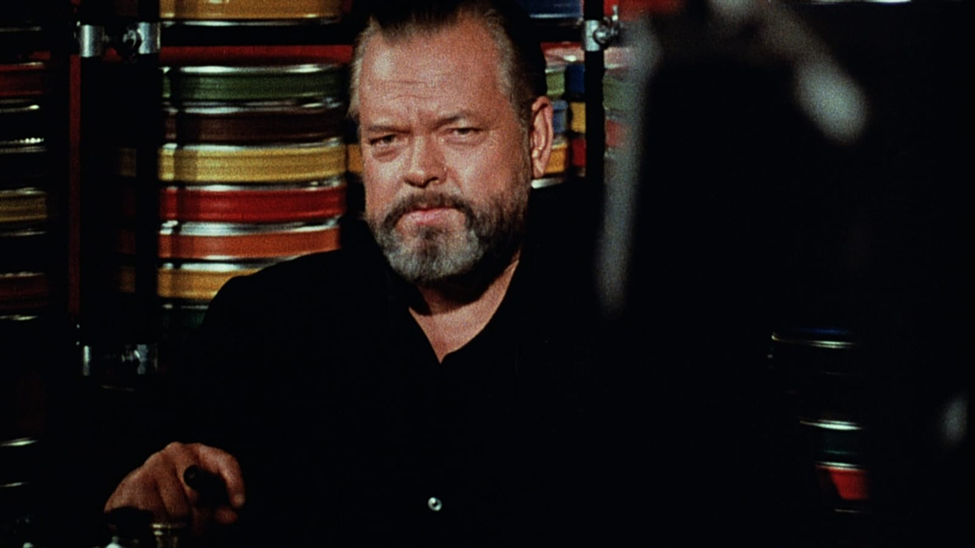
Citizen Kane (1941) is widely considered one of the best movies of all time, and it is one that follows a man across the eight decades of his tumultuous life. We see Charles Foster Kane in all manners. He is humble and he is successful. He is measured and he is egomaniacal. He is beloved and he is despised. He is regretful and he is contemplative. He lives a full range of human emotions and experiences, as many older adults know well. Denver Film, one of Next50’s grantees, is dedicated to featuring movies with these thoughtful stories of aging. According to their Creative Director, Keith Garcia, Welles created and performed “a ton of interesting character studies around people fifty and up,” with Citizen Kane marking only the beginning of this work. Orson Welles is the embodiment of aging in the Golden Age of Hollywood: hardworking, multifaceted, creative, and dynamic, both in front of the camera and behind it.
The 60s, 70s, and 80s marked a major shift in Hollywood, an era referred to as New Hollywood. This also led to a major shift in who studios were trying to bring to the movies, namely, teenagers. Keith Garcia remarked that this time was guided by marketing to younger audiences with the prevailing thought of, “We gotta put a hot young thing in a lead role.” And so they did. The 1970s saw hits like Grease (1978) with John Travolta and Olivia Newton-John, and American Graffiti (1973) with Richard Dreyfus and Mackenzie Phillips. Teen movies exploded in the 1980s with the likes of The Breakfast Club (1985), The Goonies (1985), Ferris Bueller’s Day Off (1986), Dirty Dancing (1987), and Heathers (1988), to name just a few of the giants of the decade that marketed to younger audiences.
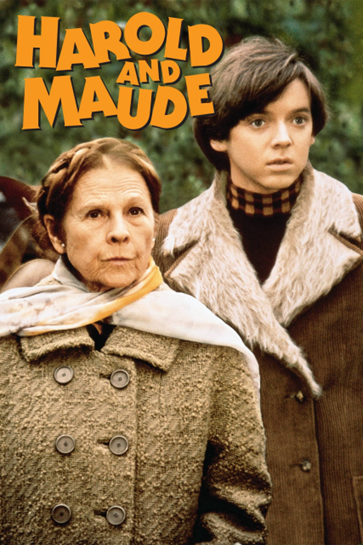
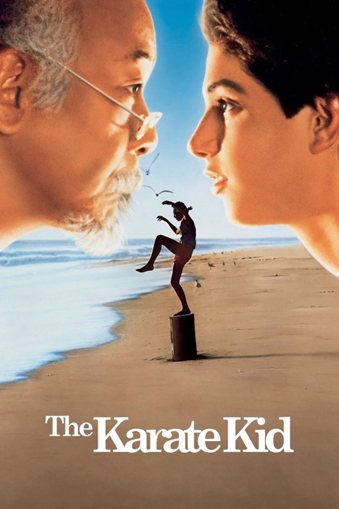
This burgeoning interest in teenagers as a marketable audience led to a huge decline in the representation and inclusion of older adults in cinema. One study found that 35% of older adults in these movies were portrayed as angry, uptight, and stern, simply out of touch with the world of the “hot young things” now in lead roles 3. There were, of course, many movies to the contrary, even if older adults were far less considered during this period. Two evergreen examples of positive, dynamic depictions of older adults alongside teenagers include Harold and Maude (1971) and The Karate Kid (1984). 79-year-old Maude becomes a positive (if inappropriate) pillar in young Harold’s world, showing him that life is worth living; and it is worth living at any age. Mr. Miagi is a wise and eccentric mentor who teaches Daniel how to practice honor and discipline in karate and in life. Both of these films have been selected for preservation by the Nation Film Registry by the Library of Congress because they are “culturally, historically or aesthetically significant” films, due in no small part to the well-rounded older adult costars.
The 2000s welcomed a new slate of movies by and about older adults, including hits like Something’s Gotta Give (2003) with Diane Keaton and Jack Nicholson, and the Oscar-winning Nebraska (2013) with Bruce Dern and June Squibb. These movies range from the comedic to the dramatic, from the beloved to the acclaimed. And these movies show older adults in many lights: in love, in fights, in hope, in desperation. The films and the media of 2020s are where we are seeing the fruits of our demands for more diverse representation. This is crucial to great filmmaking and it is crucial to everyday human interaction because, as Keith Garcia put it, “Our lives are populated with all sorts of different people, every single day. Even if someone just walks by you, they’re in your life for a hot second. So visibility is the biggest part [of diverse representation in media].” If more people are visible on screen, those same people can be visible in our lives; visible as the well-rounded, interesting, full, and even sometimes frustrating people that they are.
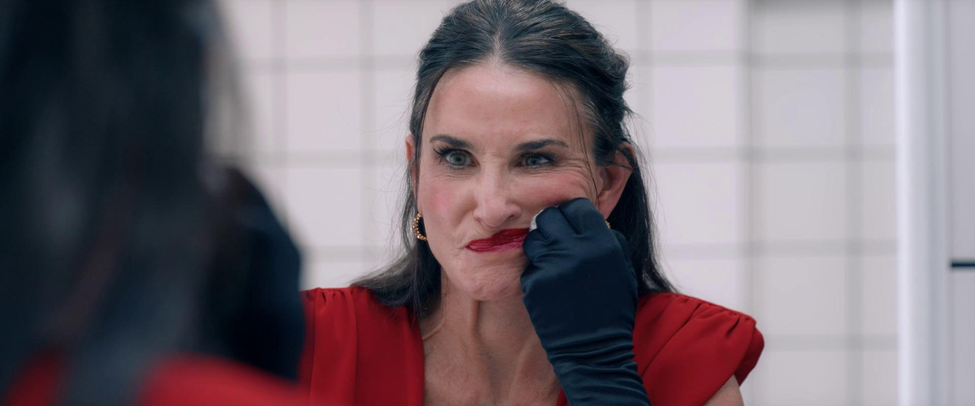
This eye toward representation has made the past few years of cinema some of the strongest it has been for older adults. Stellan Skarsgård won a Golden Globe for Best Supporting Actor for Sentimental Value (2025), which is about an older man’s complicated, sometimes unkind relationship with his adult daughters. Jimpa (2025) stars John Lithgow as an older gay man who provides a safe space for his nonbinary grandchild. Nomadland (2020) sees Frances McDormand as a hardscrabble woman who, after losing her factory job, roams America in her van. Demi Moore put a spotlight on ageism in The Substance (2024), a body horror film about an actress who has been replaced by a much younger woman and the lengths she goes to in an attempt to regain her youth. International films are also no strangers to this shifting portrayal of older adults. The Baronesses (2026) sees a group of older immigrant women fighting to put on a DIY rendition of Hamlet. My Favorite Cake (2024) is a romance between two people in their seventies, and it serves as a brave critique of an oppressive government.
While there is always a longer way to go with representation of older adults – including more people of color, people with disabilities, and stories around caregiving – the 2020s are a promising look at the future of film. And the future of film can help shape the future of aging. One of Next50’s grantees, the Geena Davis Institute, gives three easy guidelines for increasing aging representation: cast more women over 50, increase the diversity of race and sexuality of older adults, and avoid ageist stereotyping. Sometimes the solution is as simple as “casting characters ages 50+ in roles originally written for younger characters without changing the dialogue or other aspects of the character” 1. Imagine if Gone With the Wind (1939) had cast 70-year-olds as Scarlett O’Hara and Rhett Butler. What if Sixteen Candles (1984) were Sixty Candles? And maybe Dune (2021) could have replaced Timothée Chalamet with Idris Elba.
Amy Madigan’s turn as Aunt Gladys in Weapons (2025) is just one exciting benchmark on Hollywood’s path toward creating more roles for older actors. However, her historic Oscar win doesn’t have to be a one-time only occasion: it can be an opportunity for films to tell more dynamic, positive, and engaging stories about older adults– and Next50 will continue to invest in changing this narrative.
Sources
¹ Geena Davis Institute on Gender and Media. Beyond the Stereotypes: The Reality of Aging Women in Films (“The Ageless Test”). Geena Davis Institute, 2020. https://geenadavisinstitute.org/research/the-ageless-test/
² Smith, Stacy L., Marc Choueiti, and Katherine Pieper. Still Rare, Still Ridiculed: Portrayals of Senior Characters On Screen in Top-Grossing Films of 2015–2016. USC Annenberg Inclusion Initiative, USC Annenberg School for Communication and Journalism, 2018. https://assets.uscannenberg.org/docs/still-rare-still-ridiculed.pdf
³ Magoffin, Dawn Leah. Stereotyped Seniors: The Portrayal of Older Characters in Teen Movies from 1980–2006. Master’s thesis, Brigham Young University, 2007. BYU ScholarsArchive, Theses and Dissertations. https://scholarsarchive.byu.edu/cgi/viewcontent.cgi?referer=&httpsredir=1&article=1976&context=etd



 English
  Español de México