
By Sydney Byer, Director, Advocacy & Strategic Initiatives, Siguiente50
Each January, the Consumer Electronics Show gathers the world’s most forward-leaning technology thinkers. CES 2026 brought together over 4,100 exhibitors and 148,000 attendees, pushing boundaries in AI, mobility, health-tech, robotics, and more. For Next50, the central question wasn’t simply what’s new, but what truly accelerates aging well, equitably, and meaningfully. Ultimately, how can technology be leveraged to change systems and make aging more affordable?
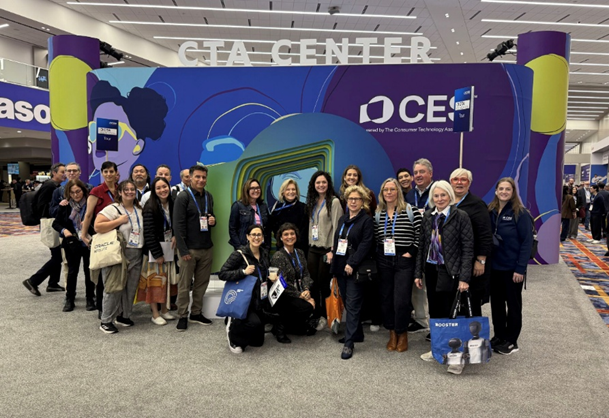
Like years past, we would not have been able to navigate the overwhelming amount of technology, panels, and crowds without our partner Consumer Technology Association Foundation. They brought us along for the CTA Foundation’s Funder Tour, moving from early-stage startups in Eureka Park to global leaders like LG, Bosch, Siemens, Abbott, and Sony. Over two days of sessions, demos, and conversations, the demonstration of innovation was clear, but so were some persistent gaps between promise and impact.
A Horizontal View of Aging
One insight emerged with striking clarity across both the Venetian Expo and Las Vegas Convention Center: aging and accessibility are horizontal, not vertical. Technology for aging well cannot be an afterthought or niche category. It must be core to how we design smart homes, reimagine transportation, advance robotics, transform digital health, and deploy artificial intelligence. This was demonstrated with the first-ever Accessibility Stage powered by Verizon, which provided start-ups, thought leaders, and Next50’s CEO Peter Kaldes the opportunity to bring aging and accessibility front and center in conversations and panels.
The most successful innovations we encountered offered functionality with dignity. This was seen in fall-prevention wearables and adaptive exoskeletons to home-based health monitoring platforms and AI companions. Yet, we also saw many technologies still default to reactive interventions rather than proactive, prevention-oriented design.
The AI Inflection Point: Personalization Meets Purpose
Perhaps no theme captured more of my attention than artificial intelligence’s expanding role in health and aging. The AARP-presented session “AI and Aging: Designing for Longevity and Personalization” brought together leaders, including Dominic King (VP of Health, Microsoft AI) and Dr. Myechia Minter-Jordan (CEO, AARP), to explore how AI should evolve to serve aging populations.
Several themes from this discussion mirrored conversations I had with peers and colleagues throughout the conference, including:
- Tailored care through generative AI. AI is moving beyond automation toward truly personalized care pathways. The technology can now recognize individual needs rather than defaulting to one-size-fits-all solutions, making tasks like health monitoring, medication management, appointment reminders, and everyday decision-making valuable.
- Equity as a core design principle. Multiple speakers on the panel emphasized that equity cannot be an afterthought. AI tools must serve diverse populations with varying functional needs, languages, cultural contexts, and socioeconomic realities from the beginning, not as an add-on.
- Independence and autonomy. AI’s greatest promise lies in supporting people to remain in their homes and communities longer through predictive insights, adaptive assistance, and seamless integration with care ecosystems. As AARP research reveals, two in three older Americans see technology positively, with most saying tech helps make daily life easier, enriches their lives, and enables aging in their home.
These insights remind us that AI’s potential in aging hinges on design intention: systems that enable autonomy, respect choice, and address real-world barriers older adults actually face.
Innovation Highlights: What Caught Our Attention
Walking the expansive show floors, several innovations stood out for their potential to meaningfully impact aging well:
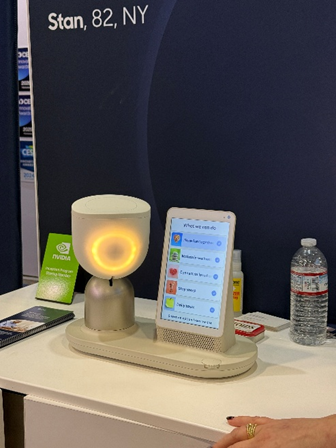
- Cairns Health created Luna, an AI-powered voice-based care companion that uses ambient sensing to interact with and support older adults living at home, offering medication reminders, brain games, meditation, and conversation prompts. Luna won the CTA Foundation’s Eureka Park Accessibility Contest and was the runner-up for the CTA Foundation’s Pitch Competition presented by Next50.
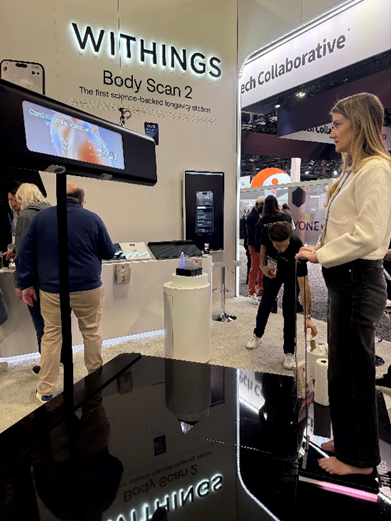
- Withings Body Scan 2 exemplified the shift toward proactive health management. This scale can track over 60 biomarkers, including hypertension risk, cardiac pumping efficiency, and metabolic health, positioning itself as what the company calls “the world’s first science-backed longevity station.”
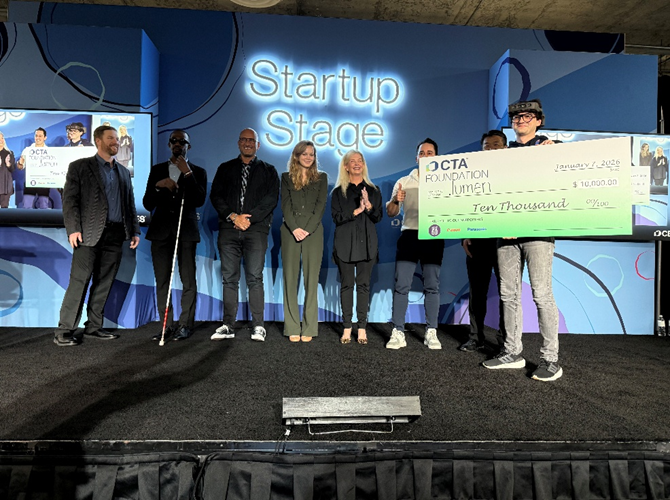
- Accessibility innovations included Captify‘s live captioning glasses for people with hearing impairments (which won the AgeTech After Dark pitch competition). Also, Proprio bands from Accelera, which is a subtly vibrating wearables that help older adults better sense their position in space and maintain balance to prevent falls. Lastly, the winner of the CTA Foundation Pitch Competition was .lumen an AI-powered wearable glasses using pedestrian autonomous driving and haptic feedback to help blind and visually impaired individuals navigate safely and independently through the real-world environment
- Robotics for independence ranged from companion animals (including Jennie, a remarkably realistic Labrador Retriever puppy that won CNET’s “Best Age Tech” award) to functional assistive devices like RAMMP’s robotic wheelchairs that navigate independently, open doors, and even pull products from store shelves.
- Smart bathroom technologies demonstrated creative approaches to health monitoring, from AI-powered toothbrushes that can detect potential health conditions in users’ breath to smart toilets that automatically analyze urine and alert caregivers to concerning patterns.
From Prototype to Adoption: The Hard Work Ahead
CES is rich with prototypes. But, as many of us who participated in the Aging Funders tour discussed, moving from prototype to widespread adoption requires alignment with public systems, reimbursement models, and rigorous evidence of value. During our tour, three systemic frictions emerged:
- Reimbursement and market fit: Many devices are too expensive for individuals, particularly individuals living on fixed incomes. Often, they are not structured for insurance or Medicare/Medicaid reimbursement, which can force these innovative startups to target niche channels instead of broad populations.
- Evidence gaps: Few solutions presented at CES that were in their start-up phase had strong outcomes data showing impact on health, independence, cost savings, or quality of life. Without rigorous evidence, adoption by health systems and public programs remains limited.
- Infrastructure barriers: Issues such as lack of broadband in rural communities, digital literacy barriers, and uneven caregiver support structures seriously constrain impact, regardless of technological promise.
These challenges underscore that technology alone is not the solution; it must be embedded in policy, financing, and community infrastructure.
The Joy Span
CES also showcased a crucial dimension often overlooked in aging technology: joy span. Alongside devices focused on safety and health monitoring, we encountered innovations designed for connection, creativity, and pleasure. For example, gaming experiences adapted for cognitive engagement, immersive entertainment technologies, and companion robots that provide genuine emotional comfort. As we know, this older adult demographic isn’t simply managing decline; they’re actively pursuing enrichment, adventure, and new experiences. Technology that acknowledges this reality, that treats aging as an opportunity rather than a problem to be solved, represents a fundamental shift in mindset.
A Call to Action for Philanthropy
CES 2026 reaffirmed what we at Next50 have long believed: the future of aging must be shaped by systems change, not isolated innovation. During discussions with other funders focused on aging, we discussed how philanthropy can continue to engage and support technology’s promise for aging well. Some of the conversations pointed to the need for:
- Shared standards and evidence frameworks that enable rigorous evaluation of AgeTech impact;
- Shared Language. Words shape perception, and throughout CES, we paid close attention to how aging is discussed. Terms like ‘silver tsunami’ and phrases like ‘suffering from aging’ still persist in marketing and can undermine the very population these technologies aim to serve;
- Policy engagement to make reimbursement and regulatory pathways more navigable for high-value solutions;
- Co-design partnerships that genuinely center older adults, caregivers, and diverse communities in innovation pipelines;
- Widen the tent. Key stakeholders like Medicaid directors from rural states and health systems need to be at the table for these discussions, in addition to other industries like fashion that can integrate assistive technology with dignity and style.
- Investment in infrastructure that extends the benefits of technology into homes, neighborhoods, and rural contexts.
The future of aging will not be built on the CES floor alone. Technology is essential but insufficient. Impact requires aligning policy, financing, evidence, and community engagement around shared goals. Aging will be shaped by how innovations intersect with real lives, real systems, and real communities. CES 2026 provided a powerful snapshot of what is possible and a clear reminder of the collaborative work ahead. Next50 remains committed to advancing that work, with an eye not just on innovation, but on impact.



 Español de México
  English